
Are you ASRS Reporting Ready?
Australian Sustainability Reporting Standards (ASRS) are a board-level disclosure obligation that must be defensible.
Fair Supply guides your team through how to prepare, structure and deliver a compliant report with confidence.
Trusted by global climate leaders






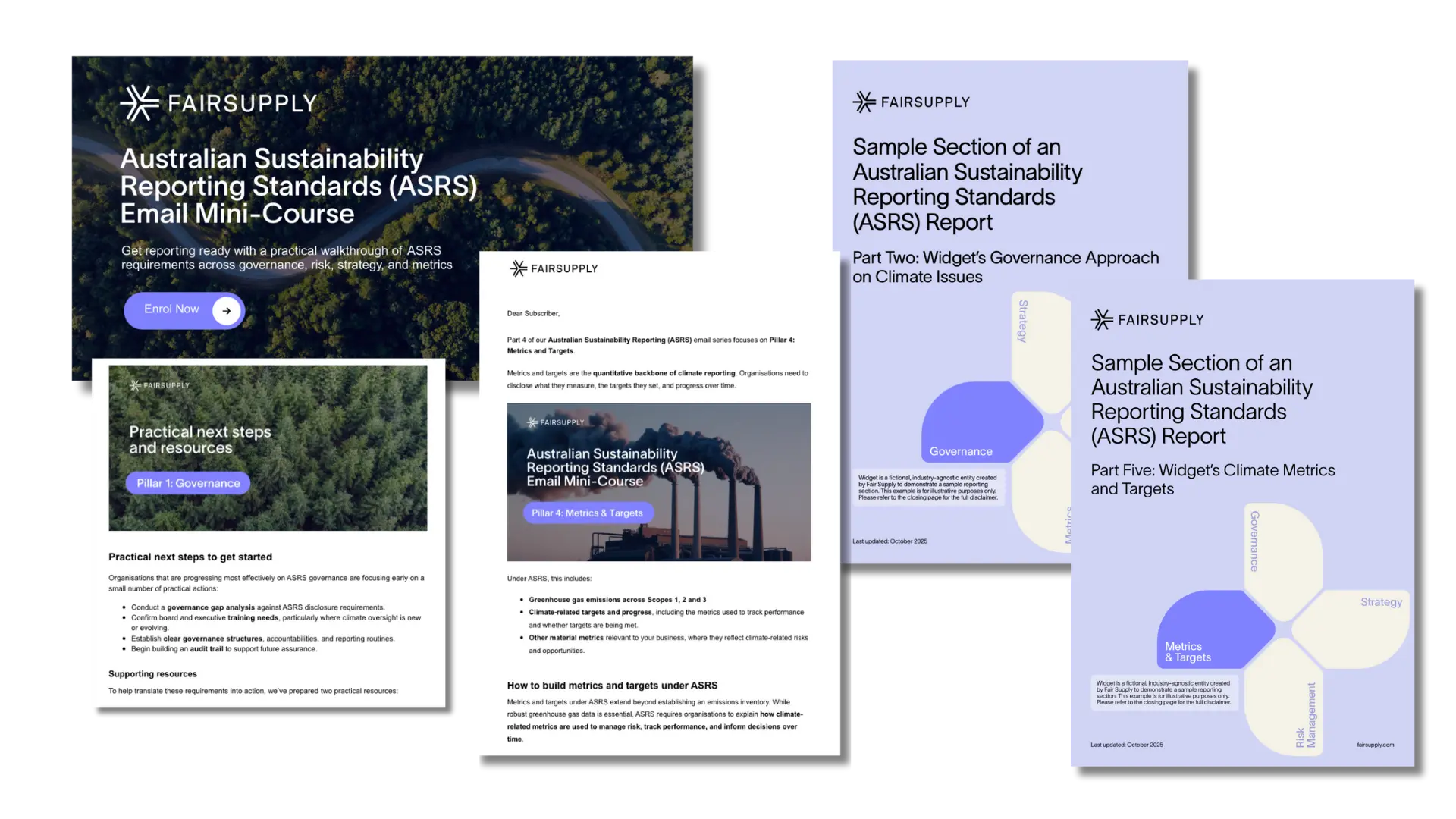
The ASRS Email Mini-Course
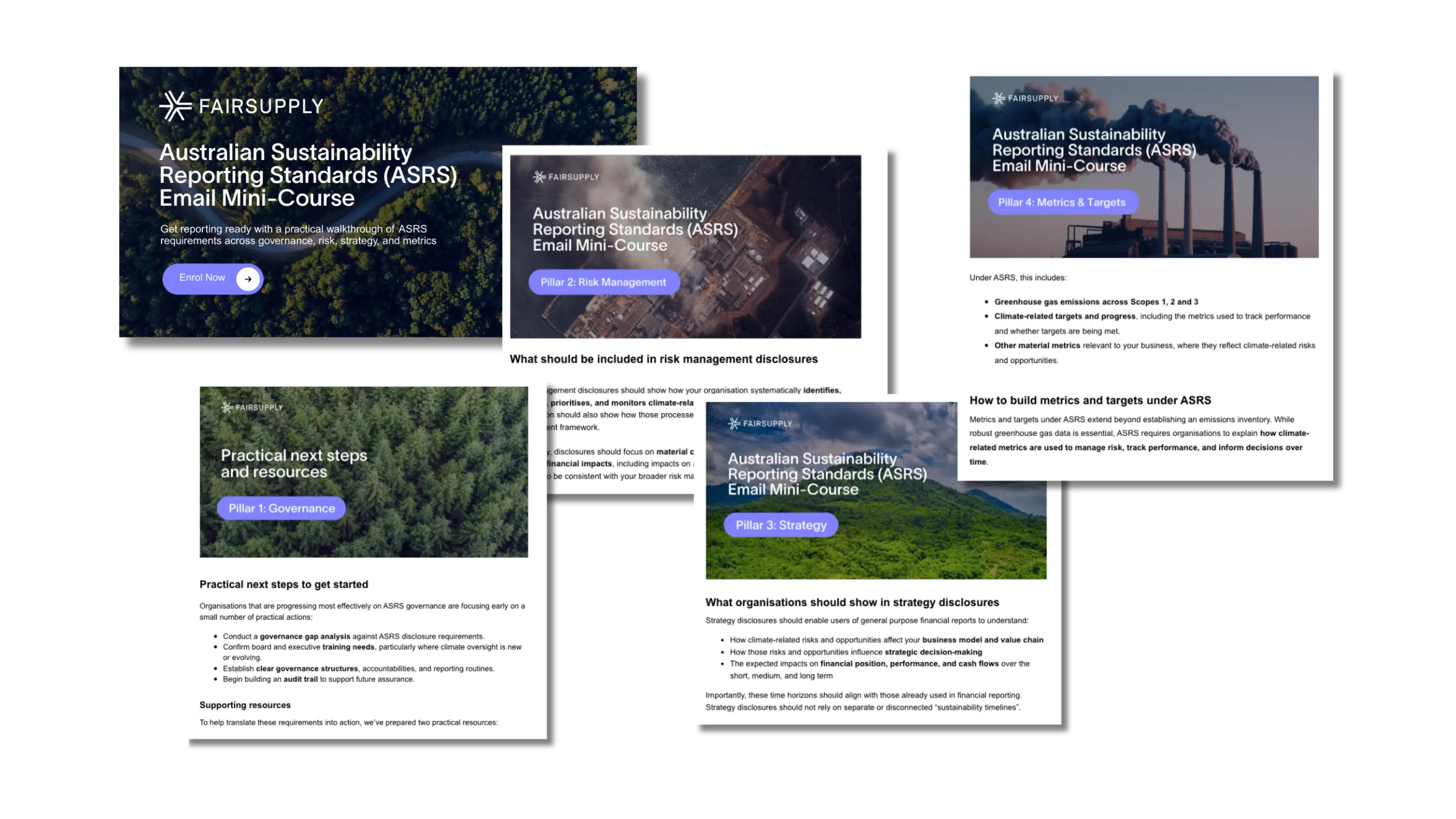
A practical, step-by-step guide to preparing an ASRS-aligned sustainability report. This five-part email mini-course is designed for organisations reporting under the Australian Sustainability Reporting Standards (ASRS) for the first time.
Fill in the form below to enrol in the course and learn what ASRS requires, what “good” looks like in practice, and how to approach each reporting pillar.
Access the ASRS Email Mini-Course
Fill in the form to get short and sharp insights on how to prepare an ASRS-aligned sustainability report.
Full ASRS Reporting Readiness Pack
Australia’s new Sustainability Reporting Standards (ASRS) are built around four pillars – Governance, Strategy, Risk Management, and Metrics & Targets.
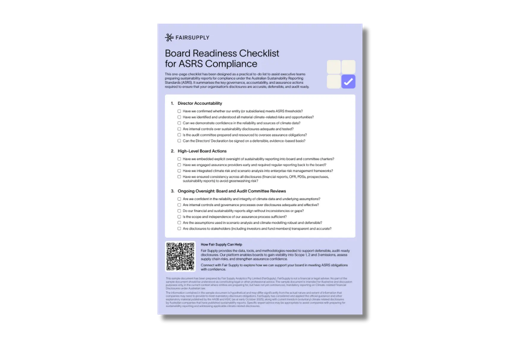
This pack provides sample chapters for two pillars: Governance and Metrics & Targets. It also includes a board-readiness checklist, and a sample project plan to help your organisation assess readiness, engage leadership, and plan for ASRS-compliance.
Click below to download the full pack or download each individual asset individually below.
.webp)
.webp)
Why Emissions Data is Central to Sustainability Reporting
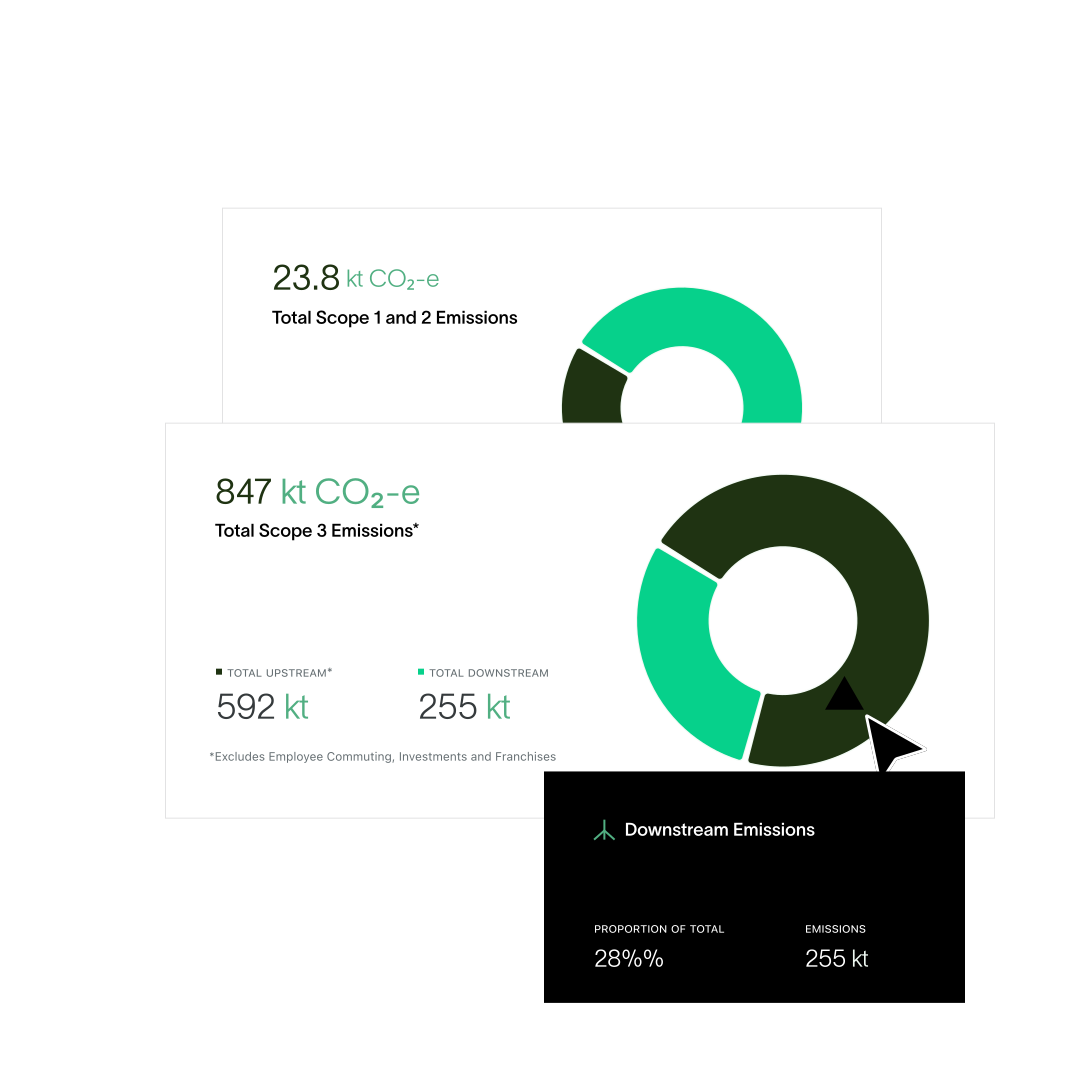
A credible sustainability report starts with a clear and complete picture of your emissions profile. This is the foundation for strategy, scenario planning, and setting credible targets.
- Scope 1 and 2 emissions sit within operational control.
- Scope 3 emissions cover your value chain and, can for account for 70–90% of total emissions on average. Scope 3 is the most complex to measure, but also where the greatest opportunities for meaningful reductions lie.
Without accurate emissions data, disclosures cannot withstand assurance, exposing organisations to regulatory, reputational, and financial risks.
Learn how Fair Supply can support your organisation with a complete Scope 1, 2 and 3 Solution.
Data and Methodology You Can Rely On
Fair Supply’s platform combines global economic data with leading climate and emissions datasets to deliver results that are both transparent and defensible.

Sourced from trusted global datasets
PRIMAP (Potsdam Institute), EDGAR, national statistical agencies, and UN Statistics Division

Comprehensive supply chain visibility
Fair Supply’s methodology maps comprehensive financial flows representing 98% of the global economy and overlays them with environmental impact data.
Trusted by Auditors
Fair Supply’s methodology has undergone independent limited assurance. When working with Fair Supply, you will be backed by emissions experts who work directly with auditors.