
ESG Software for Education Providers
Fair Supply enables education institutions to understand their entire supply chain, quantify ESG risks across academic and operational procurement, and lead the sector in transparency, integrity and responsible stewardship of public and private resources.
.avif)
Universities, schools and education networks around the world rely on Fair Supply to strengthen governance, procurement assurance and ESG performance.





Turn ESG obligations into a strategic advantage
Forward-thinking education providers are moving beyond compliance-driven reporting and using ESG insights to strengthen governance, safeguard institutional reputation and improve financial accountability across complex supply chains. By embedding ESG into procurement and operational decision-making, institutions can reduce exposure to ethical and regulatory risk while supporting long-term sustainability
With Fair Supply, ESG becomes more than risk management. It becomes a foundation for ethical procurement, campus resilience and community trust, supporting transparent decision-making for boards, regulators, students and funding bodies.
Stay ahead of regulation
Keep pace with evolving ESG frameworks, including ISSB, reporting standards and modern slavery legislation, and remain audit ready across all jurisdictions in which the institution procures goods and services.
Build trust with students, staff and stakeholders
Demonstrate a commitment to ethical and sustainable procurement through defensible, data-driven insights that support transparency for governing councils, accreditation bodies, government agencies and the broader community.
Uncover hidden risks in your supply chain
Identify suppliers and service providers with elevated ESG risks before they become liabilities. This includes facilities management, construction, IT systems, catering, uniforms, laboratory equipment, cleaning contractors and student service providers.
Manage multiple risk types, all in one platform

Modern Slavery
Understand human rights risks and stay aligned with current and emerging regulations in any region.

Carbon Emissions
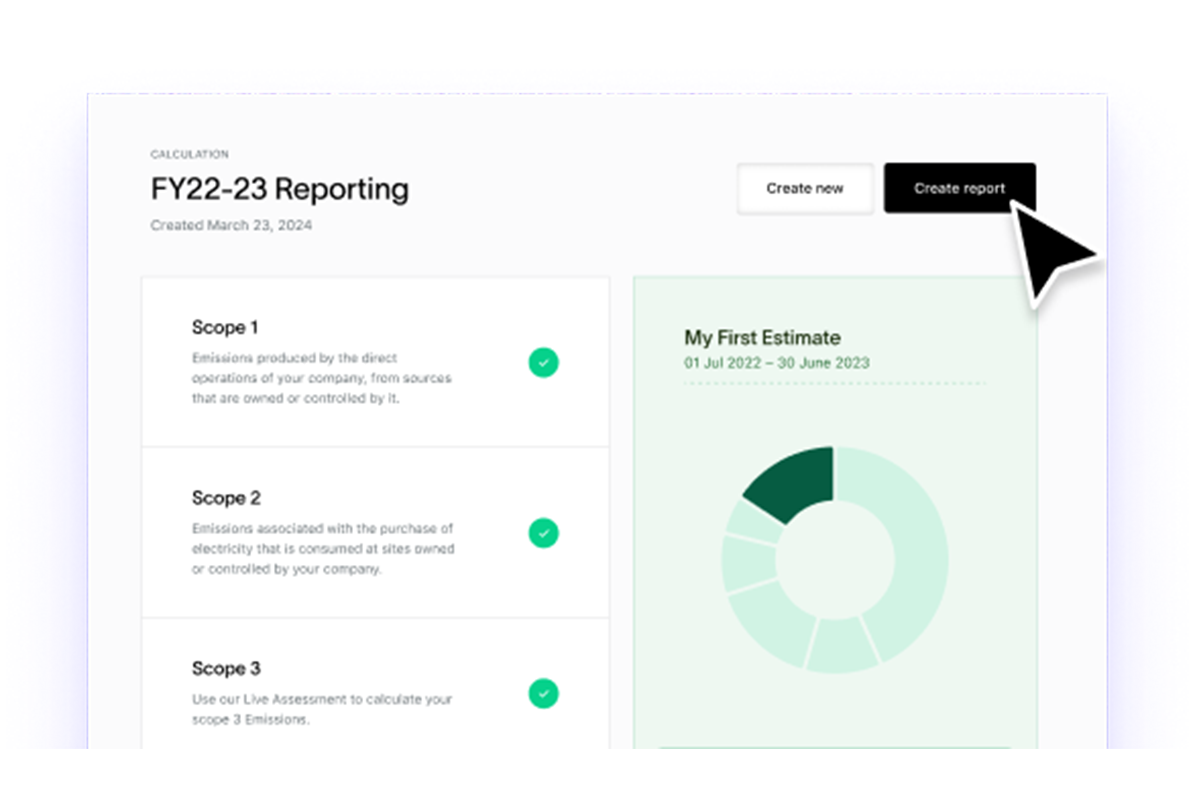
Model Scope 1, 2 and 3 emissions across your supply chain and produce fast disclosures and regulator-ready reports.

Biodiversity Impact
Measure environmental destruction throughout your supply chain and proactively reduce your impact to stay ahead of evolving regulations and customer concerns.

Global Trade Risk
Use our tariff calculator to understand the impact of global trade policy shifts on your supply chain costs.
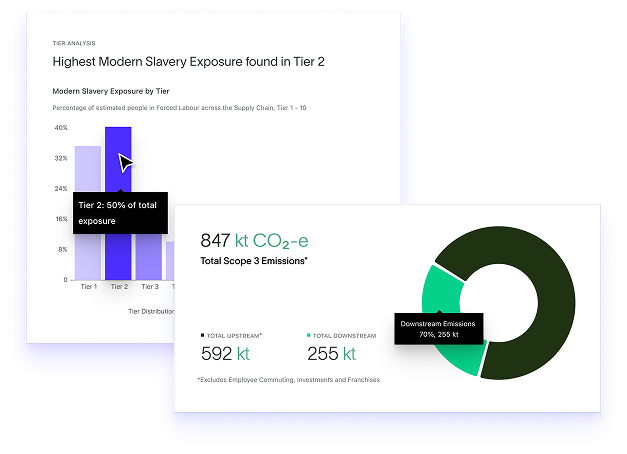
Global Supply Chain Mapping
Visualise every tier of your education supply chain with high resolution data that highlights ESG risks across both academic and corporate services.Fair Supply uses proprietary modelling to trace exposure beyond direct suppliers and reveal indirect and deep-tier relationships that typically remain hidden in global education procurement ecosystems.
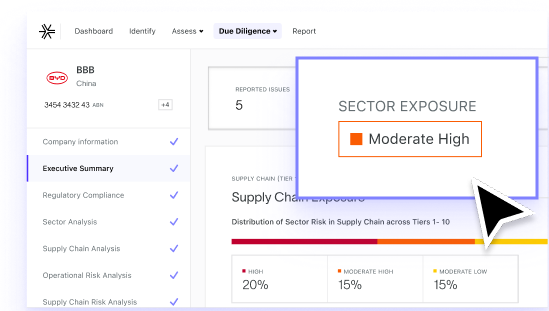
Engage Suppliers at Scale
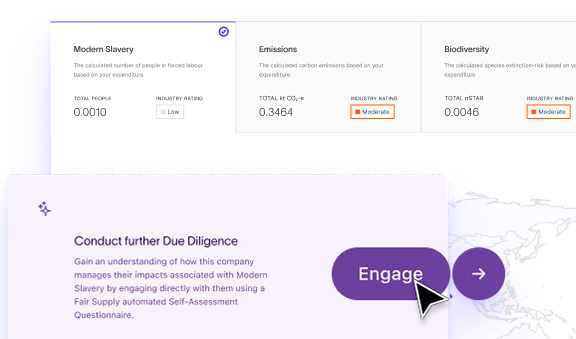
Centralise how you assess, engage, and document supplier ESG performance. Standardise SAQs, track responses, and maintain a clear, auditable record of activity.


FAQs
Why do education institutions need ESG software?
Education providers manage extensive and diverse supply chains that include facilities services, construction, IT infrastructure, research materials, catering, security and student support services. These supply chains are exposed to ESG risks including modern slavery, emissions, biodiversity impacts and inconsistent supplier reporting. ESG software provides a defensible way to quantify and manage this exposure, supporting governance, compliance and transparency commitments.
How does Fair Supply support Tier 10 visibility for education supply chains?
Universities, schools and TAFEs rely on multi-tier global procurement networks that include technology providers, furniture suppliers, construction contractors, laboratory equipment manufacturers, cleaning and catering suppliers and student experience vendors. Fair Supply maps risk up to 10 tiers, revealing upstream exposure that supplier self-declarations may not reliably provide. This level of visibility helps institutions identify risks in both research related and operational purchasing.
How does ESG software improve real world usability for procurement and facilities teams?
Education procurement teams manage thousands of suppliers across both campus operations and academic delivery. Fair Supply requires only supplier name and spend to generate multi-tier insights. Dashboards present complex modelling results in clear, practical formats suitable for campus operations, sustainability planning, vendor management and reporting to governing bodies.
How does Fair Supply support ESG reporting and compliance for education organisations?
Education providers face increasing expectations for transparent reporting, including compliance with CSRD, CSDDD, modern slavery obligations and climate related frameworks such as ISSB and TCFD. Fair Supply generates audit ready ESG reports that consolidate supplier risk data into a single, defensible source of truth. These outputs support accreditation processes, government reporting, annual sustainability statements and governance reviews.
How does Fair Supply support Scope 3 emissions screening in education?
Scope 3 emissions in education arise from travel, construction, facilities management, ICT procurement, laboratory operations, catering, waste and outsourced services. Fair Supply automates Scope 3 screening by classifying spend, applying defensible emissions factors and producing reporting-ready summaries. This helps institutions identify material emissions sources and integrate findings into decarbonisation strategies and net zero planning.
How does ESG software enhance supplier due diligence for education providers?
Education institutions rely heavily on contracted services such as cleaning, security, maintenance, catering, IT, construction, transport and residential services. Fair Supply standardises supplier due diligence through configurable SAQs that assess modern slavery, emissions and biodiversity. Responses feed directly into supplier risk scoring and provide an auditable record for procurement approvals, accreditation requirements and regulatory compliance.
How does Fair Supply help education providers assess biodiversity related risks?
Biodiversity risks within education supply chains can come from construction materials, textiles, food services, chemicals and laboratory consumables. Fair Supply uses the nSTAR methodology to provide supplier specific biodiversity risk scoring and integrates globally recognised datasets such as the IUCN (International Union for Conservation of Nature) Red List and the Integrated Biodiversity Assessment Tool (IBAT). This supports TNFD, ISSB and CSRD aligned disclosures and helps institutions embed nature considerations into procurement policy.
What makes Fair Supply data defensible for education sector audits and governance reviews?
Education institutions must provide transparent and consistent evidence for internal audits, external reviews, government reporting and council oversight. Fair Supply uses independently assured methodologies, validated global datasets and complete audit trails. Every insight is aligned with major ESG frameworks and is suitable for use in strategic planning, risk committees and public reporting.