
ESG Software for Mining Companies
Fair Supply enables mining and resources organisations to embed ESG risk exposure and supply chain risk screening directly into procurement workflows, so they can take faster, more defensible action.
.avif)
Leading mining and resources companies around the world trust Fair Supply to protect their supply chains.









Turn ESG obligations into a strategic advantage
Mining procurement teams might have to juggle equipment sourced from Malaysia, chemicals from China, and contractors operating across remote sites all while investors demand credible sustainability reporting. Fair Supply turns this complexity into clarity, enabling operational teams to screen risks instantly and act with confidence.
With Fair Supply, ESG becomes a practical enabler for better commercial decisions, not a disconnected compliance task.
Stay ahead of regulation
Mining faces rapidly intensifying scrutiny across forced labour, climate and environmental domains. Fair Supply helps mining companies keep pace with evolving regulations, from ISSB and TCFD to CDP, IFRS S2, and various modern slavery legislation around the world. Remain audit-ready across multiple jurisdictions with one platform built for compliance confidence.
Build investor and stakeholder trust
Demonstrate credible sustainability performance through defensible, data-driven insights and independently assured data that withstands the scrutiny of analysts, communities, boards, and regulators.
Uncover hidden risks in your supply chain
Expose ESG risks embedded deep within your global supply chain—long before they escalate into operational, reputational, or regulatory liabilities.
Manage multiple risk types, all in one platform

Modern Slavery
Understand human rights risks and stay aligned with current and emerging regulations in any region.

Carbon Emissions
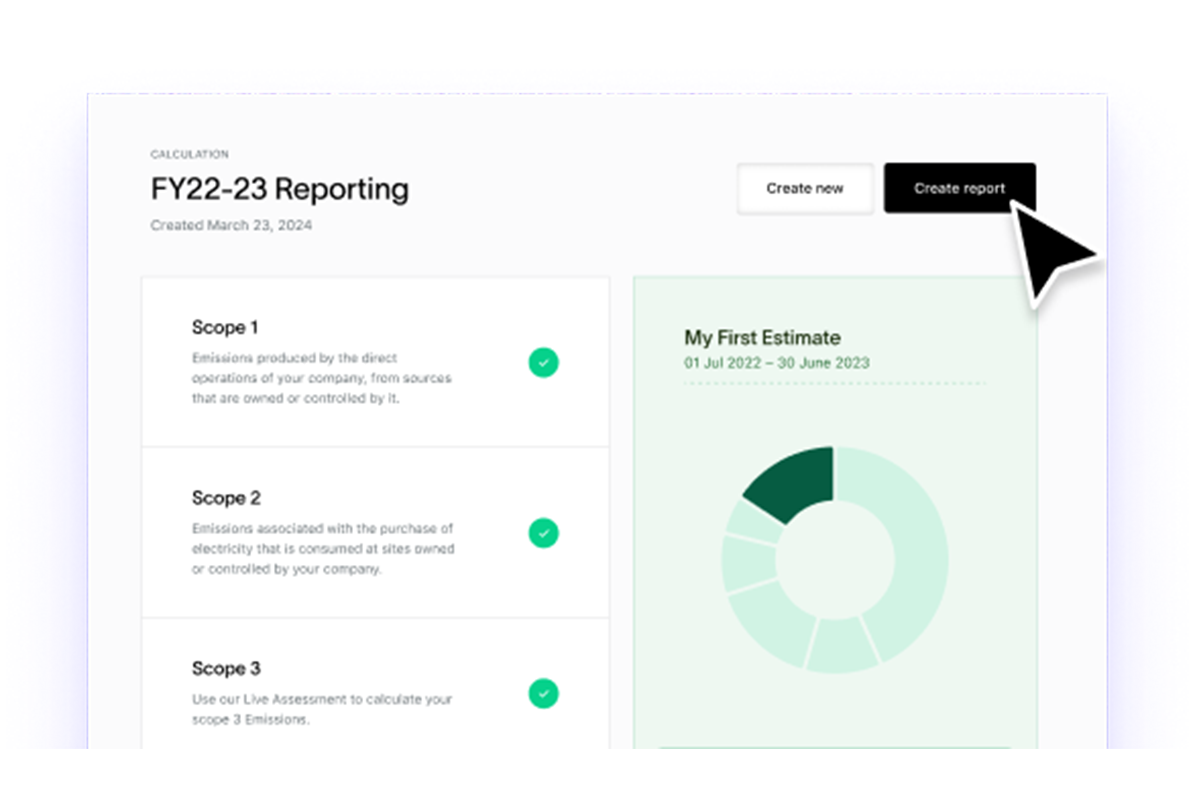
Model Scope 1, 2 and 3 emissions across your supply chain and produce fast disclosures and regulator-ready reports.

Biodiversity Impact
Measure environmental destruction throughout your supply chain and proactively reduce your impact to stay ahead of evolving regulations and customer concerns.

Global Trade Risk
Use our tariff calculator to understand the impact of global trade policy shifts on your supply chain costs.
Global Supply Chain Mapping
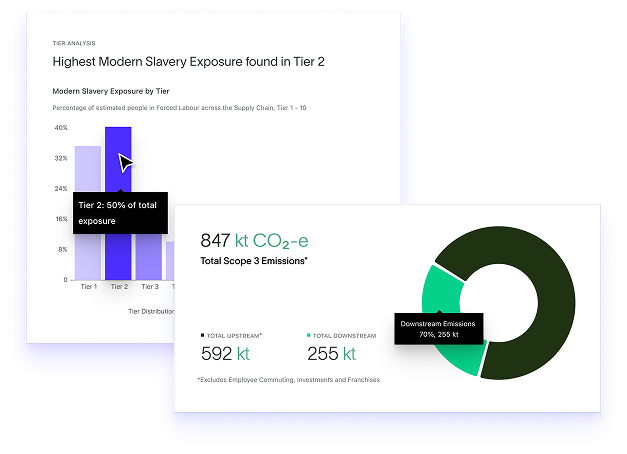
Visualise every tier of your mining supply chain with high-resolution modelling built to expose ESG and operational risk across complex, multinational sourcing networks. Fair Supply provides objective risk assessment without defaulting to supplier self-reporting—helping you see the equipment factories, chemical plants, and indirect contributors shaping your organisation’s footprint.
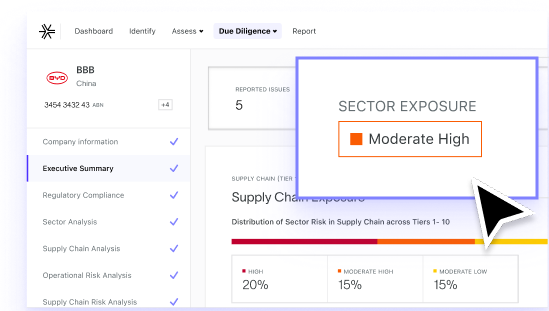
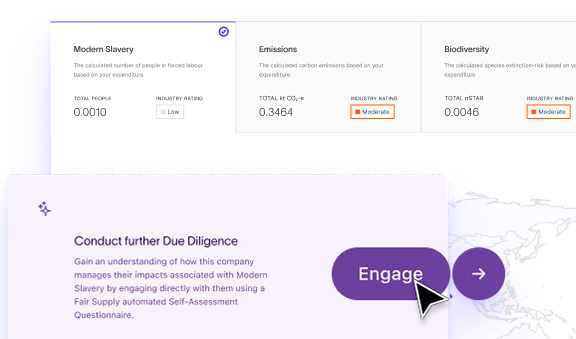
Once risks are identified, the platform guides targeted supplier engagement through adaptive, risk-based questionnaires. Mining procurement teams can screen new suppliers in seconds without waiting for sustainability sign-off or external consultants.
Engage Suppliers at Scale
Centralise how you assess, engage, and document supplier ESG performance. Standardise SAQs, track responses, and maintain a clear, auditable record of activity.

Companies like yours are getting visibility into their risks


FAQs
Why is ESG risk so high in the mining sector?
Mining’s extensive upstream and downstream footprint exposes it to environmental degradation, human rights risks, and carbon intensity. The global nature of procurement spanning heavy machinery to chemicals creates hidden ESG exposures deep within the supply chain.
How can ESG software support mining companies facing growing regulatory and investor scrutiny?
Mining operates in a highly regulated and socially exposed environment. ESG software provides a structured, defensible way to assess modern slavery, biodiversity, emissions and broader ESG exposure. Fair Supply’s independently assured risk modelling gives mining companies a consistent, comprehensive view of their supply chain risks, supporting compliance with ISSB, CSRD, TCFD and modern slavery legislation while strengthening disclosure credibility for investors and boards.
Why is Tier 10 supply chain visibility important for mining?
The most material ESG impacts in mining often occur far upstream across heavy manufacturing, chemicals, logistics, and equipment supply chains. Tier 10 visibility allows mining companies to identify risks that sit well beyond direct suppliers, supporting more targeted engagement and reducing the likelihood of hidden issues emerging during audits, permitting processes, or community consultations.
How does Fair Supply help mining companies manage Scope 3 emissions?
Scope 3 emissions usually make up the majority of mining’s carbon footprint, yet supplier data is often incomplete or inconsistent. Fair Supply uses defensible, EEIO-based modelling to generate supplier-level emissions estimates, identify hotspots and support reporting aligned with IFRS S2, TCFD and ESRS. This enables mining companies to plan decarbonisation activities based on consistent, auditable data rather than scattered self-reported figures.
How does the platform support modern slavery risk management in mining supply chains?
Mining supply chains span high-risk geographies and industries. Fair Supply surfaces modern slavery exposure across all supply chain tiers and enables targeted engagement with high-risk suppliers. Binary, automatically scored SAQs remove subjectivity and ensure assessments are consistent, comparable and defensible. This helps mining companies meet the requirements of the Australian Modern Slavery Act, CSDDD and global due diligence standards.
How is biodiversity risk assessed for mining operations and suppliers?
Mining’s footprint intersects directly with biodiversity concerns. Fair Supply’s biodiversity solution uses nSTAR methodology and global datasets (IUCN, IBAT) to quantify species-level impact across your supply chain, including indirect contributors. This supports alignment with TNFD, ISSB and CSRD, and helps organisations identify where upstream biodiversity impacts are concentrated.
How does Fair Supply make ESG data usable for procurement and operational teams?
The platform translates complex ESG information into intuitive heatmaps, dashboards and supplier-level risk summaries. Because only supplier name and spend are required to begin, procurement and ESG teams can integrate Fair Supply seamlessly into sourcing processes, contract reviews, project onboarding, and supplier evaluation. This eliminates the need for internal data science resources.
How does Fair Supply support audit-ready ESG and sustainability reporting?
Risk assessments, SAQ responses and supplier engagement records are centralised in a single audit-ready system. Reporting outputs align with ISSB, CSRD, TCFD, CDP and modern slavery legislation. Mining companies can provide consistent, defensible disclosures to regulators, investors and boards year-round, backed by a transparent and independently assured methodology.
How does Fair Supply strengthen supplier due diligence for mining projects?
Mining procurement teams work with diverse suppliers across equipment, engineering, chemicals and services. Fair Supply enables rapid risk screening of all suppliers, followed by targeted SAQs for those requiring deeper investigation. Automated scoring, engagement logs and an immutable audit trail create a defensible due diligence workflow that supports sourcing decisions, contract awards and ongoing supplier management.