
ESG Software for Retail Companies
Fair Supply enables retailers to understand their global supplier networks, quantify ESG risks across complex product and operational supply chains and lead the sector in transparency and responsible commerce.
.avif)
Supermarkets, specialty retailers, home and lifestyle chains, consumer electronics groups and general merchandise brands around the world rely on Fair Supply to strengthen procurement governance and ESG performance.






Turn ESG obligations into a strategic advantage
Retail leaders are shifting from reactive compliance to proactive ESG management to protect brand reputation, ensure supply chain continuity and meet rising consumer and regulatory expectations.
With Fair Supply, ESG becomes more than risk reduction. It becomes a foundation for ethical sourcing, operational efficiency and long-term commercial resilience.
Stay ahead of regulation
Keep pace with evolving ESG frameworks, including ISSB, climate disclosure standards and modern slavery legislation, and remain audit ready across all jurisdictions in which your retail business sources, operates and distributes products.
Build customer and stakeholder trust
Demonstrate a commitment to ethical and sustainable retailing through defensible, data-driven insights that support transparency for investors, regulators, partners and the communities you serve.
Uncover hidden risks in your supply chain
Identify suppliers with elevated ESG risks before they become liabilities across consumer goods, electronics, homewares, food and beverage categories, packaging, logistics, warehousing, cleaning, marketing, store operations and technology vendors.
Manage multiple risk types, all in one platform

Modern Slavery
Understand human rights risks and stay aligned with current and emerging regulations in any region.

Carbon Emissions
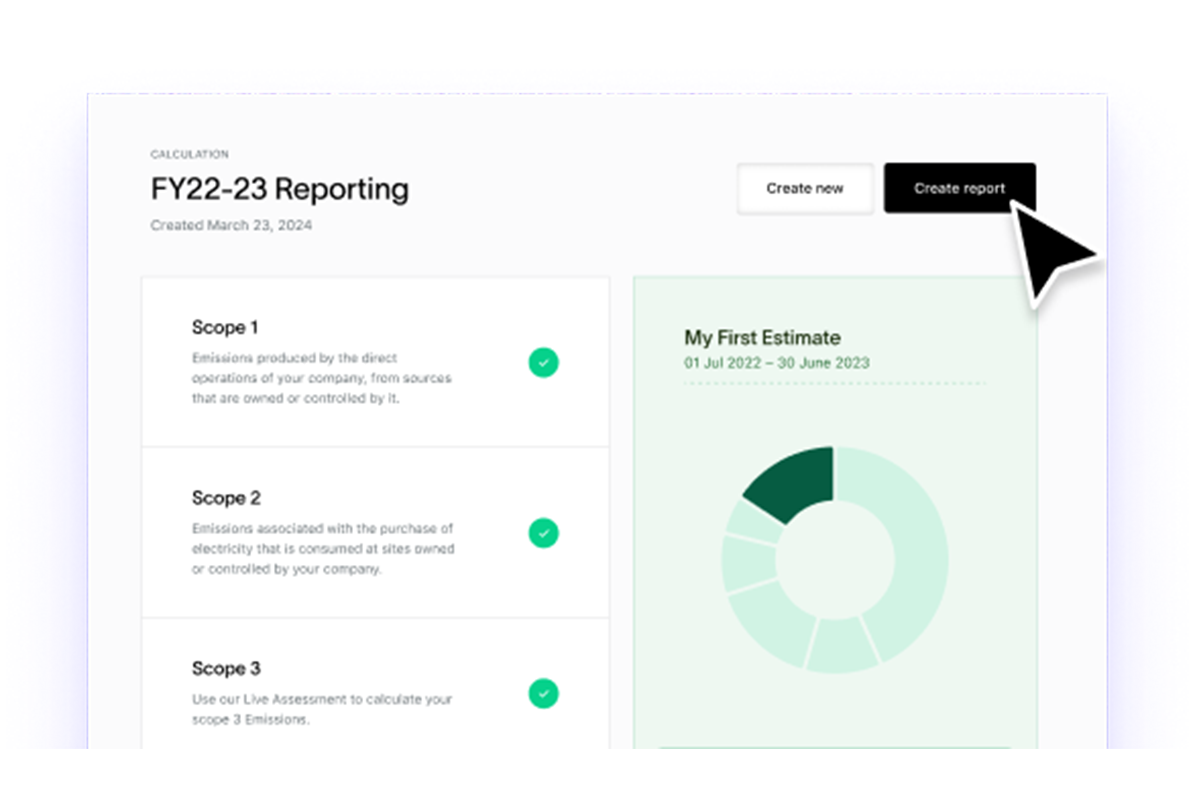
Model Scope 1, 2 and 3 emissions across your supply chain and produce fast disclosures and regulator-ready reports.

Biodiversity Impact
Measure environmental destruction throughout your supply chain and proactively reduce your impact to stay ahead of evolving regulations and customer concerns.

Global Trade Risk
Use our tariff calculator to understand the impact of global trade policy shifts on your supply chain costs.
Global Supply Chain Mapping
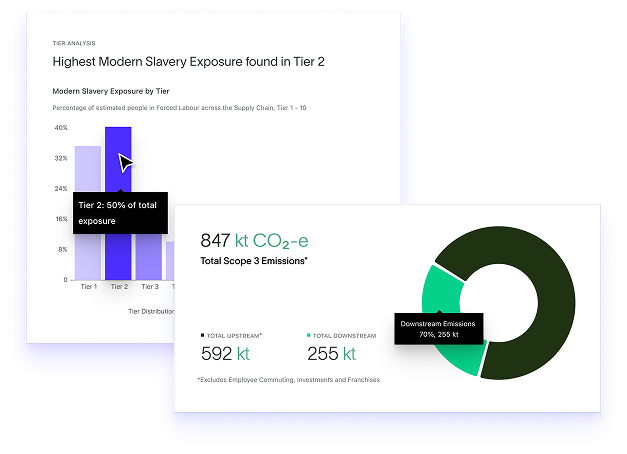
Visualise every tier of your retail supply chain with high resolution data that illuminates ESG exposure across both product sourcing and corporate operations.
Fair Supply uses proprietary modelling to trace impacts well beyond direct suppliers and uncover deep-tier relationships that are common in global manufacturing, packaging, distribution and store operations.
Engage Suppliers at Scale
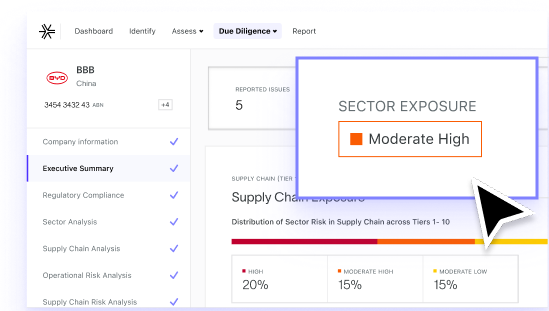
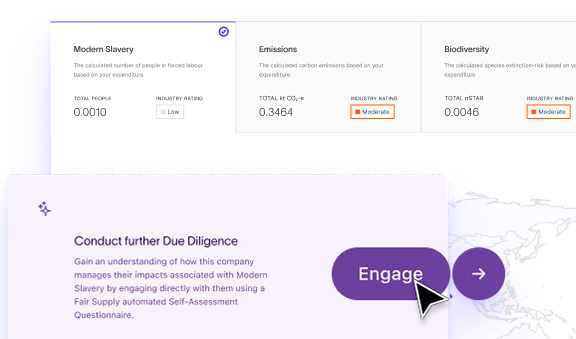
Centralise how you assess, engage, and document supplier ESG performance. Standardise SAQs, track responses, and maintain a clear, auditable record of activity.

FAQs
Why do retail companies need ESG software?
Retail businesses manage global, multi-category supply chains that are exposed to ESG risks including modern slavery in manufacturing, emissions across production and transportation, biodiversity impacts from raw materials and inconsistent supplier disclosure. ESG software provides a defensible, standardised approach to assessing risk across thousands of suppliers and diverse product categories. This supports ethical sourcing programs, regulatory compliance and brand protection.
How does Fair Supply support Tier 10 visibility for retail supply chains?
Retailers depend on multi-tier networks that include manufacturers, processors, packagers, distributors, logistics providers, technology vendors and facilities service partners. Fair Supply maps risk up to 10 tiers, revealing upstream exposure that is not visible through supplier declarations alone. This allows retailers to understand risks associated with raw materials, packaging components, production processes and indirect suppliers.
How does ESG software improve real world usability for retail procurement and operations teams?
Retail procurement teams must assess large volumes of suppliers across fast moving categories and operational services. Fair Supply requires only supplier name and spend to generate multi-tier risk insights. Dashboards translate complex modelling into clear insights that support category management, vendor onboarding, ethical sourcing reviews, logistics planning and executive reporting.
How does Fair Supply support ESG reporting and compliance for retail companies?
Retailers face increasing expectations for transparent sourcing and sustainability disclosures across CSRD, CSDDD, TCFD, ISSB and modern slavery legislation. Fair Supply produces audit-ready ESG reports using supplier level risk assessments that form a single source of truth for sustainability reporting, investor communications and regulatory submissions.
How does Fair Supply support Scope 3 emissions screening for retailers?
Scope 3 emissions in retail arise from product manufacturing, transportation, refrigeration, packaging, waste, distribution, store operations and outsourced logistics. Fair Supply streamlines Scope 3 screening by automating supplier spend classification and applying defensible emissions factors that produce reporting ready summaries. This enables retailers to identify emissions hotspots that inform decarbonisation initiatives and net zero pathways.
How does ESG software enhance supplier due diligence for retail?
Retailers rely heavily on external partners, including manufacturers, distributors, logistics providers, cleaning contractors, call centres, technology vendors and marketing suppliers. Fair Supply standardises supplier due diligence using configurable SAQs that assess modern slavery, emissions and biodiversity. All responses feed into supplier risk scoring and produce an auditable record suitable for internal assurance, customer commitments and compliance requirements.
How does Fair Supply help retailers assess biodiversity related risks?
Retail supply chains interact with biodiversity impacts through raw materials, agricultural products, packaging, chemicals and logistics. Fair Supply uses the nSTAR methodology to provide supplier specific biodiversity risk scoring and connects to datasets such as the IUCN (International Union for Conservation of Nature) and the Integrated Biodiversity Assessment Tool (IBAT). This supports nature related disclosure frameworks such as TNFD, ISSB and CSRD and helps retailers incorporate biodiversity risks into procurement decisions.
What makes Fair Supply data defensible for retail audits and stakeholder reviews?
Retailers must be prepared to provide transparent and defensible ESG evidence for investors, regulators, customers and external auditors. Fair Supply uses independently assured methodologies, globally validated datasets and clear audit trails. Every insight aligns with major ESG frameworks and can be used confidently for supplier engagement, annual reporting, board papers and ethical sourcing programs.